Sunday, September 14, 2008

Letters from the CAP Phone-in/Write-in Day of Action


I have been a client of HIP and QLIMG for the last 18 years. I still think that HIP and GHI merger will be detrimental to the health and purse of all insured with the companies. The whole gimmick has been concocted by Mr. Anthony Watkins and his counterpart in GHI. Watkins will lower himself to any level to satisfy his personal greed.

For the sake of the NY residents please do not allow the merger!!

I received notice of your demonstration on Friday, 5/9, through the HealthCare-Now list. Although I could not have gone even without the rain, I did want to follow up as I'm interested in the issue. I worked for the City in the late 1960's, and have been a HIP member since about that time, mostly on an individual basis as I was self-employed. I believed in its principles and its model as a health provider.

Now that I am retired and on Medicare, I continued my HIP coverage, but am very upset about its plan to become a 'private' provider. In the last few years, HIP has acquired more corporate-type and mainstream medical practices, such as requiring members to travel to various locations to receive what had been routine procedures. In doing so, it has lost some of my loyalty.

Going 'private' can only mean more of the same--skimpier and dispersed services, higher charges, overloaded medical staff, etc.

So, can you please let me know what your plans are to fight this move? Thanks for any information on future actions,

MAY 12, 2008

TO WHOM IT MAY CONCERN

I AM AGAINST THE PRIVATIZATION OF GHI OR HIP

AS A RETIREE OF THE QPLB IT WILL ONLY HURT NOT HELP

Superintendent Dinallo,

I write to you today to request that you deny the application for conversion to for-profit status filed by GHI & HIP. For more than sixty years, these companies have provided New Yorkers with low-cost quality health care. GHI & HIP's non-profit status has shielded more than 4 million residents from the worst effects of the national health care crisis. Removing this safeguard could trigger an even greater health care crisis in NY State.

I participated in the January 29th hearing you organized at the HIP office in Downtown Manhattan. The criteria your department set out for justifying the conversion - namely that GHI & HIP prove that it is made in the public interest - seems sound. Clearly, they fell far short of this goal and near the end of the hearing, Anthony Watson the CEO of HIP was evasive and, at times, downright hostile to your assistant Kermit Brooks. Further, it is my understanding that no independent impact analysis has been conducted. Finally, I learned that Mr. Watson, after testifying on January 29th that HIP was cash-strapped, has just boosted his annual salary by some $2 million dollars.

Clearly there are sound reasons why similar applications have been rejected in several other states since 2001. Slowly but surely, Americans are coming to grips with the real human costs of for-profit health care. My hope is that sooner rather than later this will lead to a single-payer national health care plan. Until then, it is the duty of citizens and elected officials to protect whatever is left of the non-profit health care sector. To do otherwise would be to recklessly endanger the lives of 4 million New Yorkers.

I hope that you are able to find the courage to defend the long-term interests of the people of this fine state and not succumb to the temptation offered by the short-term influx of cash which conversion would provide. Think of how you will be viewed when the history of for-profit health care is written. You can either be the person who assisted in the elimination of 60 years of health care safeguards or the one who said no to private profits and yes to the formation of a human-centered health care system. Thank you for your time.

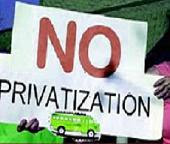
NO more privatization of health care.

Dear Superintendent Dinallo'

I am writing to express my opposition to the conversion plan for GHI & HIP. I feel it is important that this application for conversion be rejects and that you develop a plan for reforming GHI & HIP while keeping the companies non-profit.

Conversion would remove the non-profit safeguards such as a cap of 15% of the budget that can be spent on administration and oversight of premium increases. Also I am concerned about tiering of policy holders which would limit access to care.

We need to pass a single payer insurance bill such as HR 676 which would end the GHI & HIP debate.

Dear NY State Insurance Dept. of Public Affairs,

I am writing to urge you to deny the privitization plan for GHI and HIP. If these insurance companies are allowed to go private, there will be a new profit incentive for them to begin denying coverage for medical treatments even more often than they currently do. An independent impact analysis of this plan is urgently needed, and I believe it would show that this plan would prove harmful both for the city and for its citizens. Please say no to this plan.

I ask you not to go forward with the privatization plan of GHI & HIP. As a health professional and former nurse faculty member of CUNY I have received services from both health plans. I also have witnessed the hardship and suffering of patients whose claims were denied by private insurance companies.Clearly at a time when we are learning about the abuses and indefensible profits of private insurance this is the wrong way to go.

I see what the privatizating provisions of Medicare ( Medical Advantage, Part D Prescription) are doing. My premiums go up as the private insurance industry and drug companies enjoy record profits and special treatment. Don't do this to GHI and HIP.

Why is this "conversion" being considered? Who would benefit beside the private insurance industry? Why now at a time of recession? It is wrong and makes no sense. Don't do it. Don't do it.

Eric Dinallo
NY State Superintendent of Insurance


Mr, Dinallo,

I oppose the "conversion plan" for GHI/HIP and ask you to stop this from happening.

The merger of GHI & HIP would mean that 93% of city workers would be in one plan and that a 1% increase in premiums would cost the city $27.5 million; Such an increase would lead to highly contentious bargaining with TWU, UFT and D.C. 37 as City Hall attempts to increase health care concessions.

There are many concerned residents who feel the same.

Honorable Eric R. Dinallo
New York State Superintendent of Insurance
One Commerce Plaza
Albany, NY, 12257

Dear Supertindent Dinallo,

Please do not allow the GHI/HIP Conversion Plan to happen!

How would a conversion from non-profit to for profit benefit the people of New
York
? In the current economic climate, which will take years and possibly
decades to recover from, such a conversion would be devastating. As a direct
pay member whose current monthly premium is higher than our rent, our family
would not be able to afford health insurance at all. I was diagnosed with cancer
last year and need to be able to continue have health insurance.

If this conversion is allowed to occur, the "longstanding primary mission to
serve the health coverage needs of New Yorkers" will be replaced by the primary
need to increase shareholder value.

GHI and HIP were created to provide access to health care for working class
Americans. Well, we working class Americans are still here and we still need
accessible affordable health care!

Thank you for your consideration.

I am writing to express my frustration over the GHI/HIP conversion.

93% of NYC employees in one privately operated insurance plan is UNSUSTAINABLE! Of course they will raise premiums sooner or later (probably sooner!). And there are no plans for rate hearings! Furthermore, no safeguards will keep this slippery slope from eventual landslide. Private Health Insurance Must Go!

The FOR-PROFIT insurance industry is a huge problem in the provision of healthcare in this country. Worst offense: profiting by denying care!!! It happens all the time. There is no reason to expect GHI/HIP to behave differently if they become privatized.

I earnestly request that Superintendent Dinallo reject the conversion proposal for GHI/HIP.

INSURANCE CONVERSION PROPOSALS REJECTED OR WITHDRAWN IN KANSAS, MARYLAND, WASHINGTON and NORTH CAROLINA

INSURANCE CONVERSION PROPOSALS REJECTED OR WITHDRAWN IN KANSAS, MARYLAND, WASHINGTON and NORTH CAROLINA

In four other states, applications for nonprofit insurance conversions have been rejected or withdrawn since 2001. In each state, the conversion proposal received detailed scrutiny from insurance regulators, including the hiring of independent outside experts to determine the impact on the insurance market and access to health care.

KANSAS

In May 2001, BCBS of Kansas (BCBSK) and Anthem Insurance Companies, Inc., an Indiana-based mutual insurance company that was in the process of converting to for-profit, jointly announced their intent to affiliate. In this transaction, described as a "sponsored demutualization," Anthem planned to provide $370 million to BCBSK, of which $190 million was to cover BCBSK's outstanding expenses and $180 million would have been paid to eligible policyholders. BCBSK would then become a wholly-owned subsidiary of for-profit Anthem.

During the review process the Insurance Commissioner served as an impartial adjudicator, and a testimonial team, comprised of Insurance Department staff and outside counsel, was created to review the terms of the deal on behalf of the people of Kansas. The Commissioner's role included presiding over the proceedings, examining the information assembled during the review process and then making a determination whether to approve or reject the proposed transaction. The information-gathering process included five public comment meetings held in various locations across the state, and three days of formal public hearings.

Concerned about the impact on health services and access, the Kansas Association for the Medically Underserved, the Kansas State Nurses Association, the Kansas Medical Society and the Kansas Hospital Association petitioned for and were granted intervenor status in the proceedings. Over 1,200 Kansans attended the meetings to question various aspects of the deal, including whether the conversion would benefit them and to criticize the lack of objective information available on the deal.

The testimonial team and intervenors called on independent financial and economic experts to help analyze the benefits and detriments of the deal. Chief among the detriments was an analysis of the Kansas insurance environment by PricewaterhouseCoopers, which found that imposing a shareholder profit requirement on Kansas's largest insurer would likely result in additional premium increases in the small and individual group markets of $248 million over five years. In the final hours before the public record was closed, Anthem added to the terms of the deal a $25 million rate stabilization fund that the state could use to subsidize premiums for small group policies payable to Anthem.

In January 2002, the testimonial team joined the four intervenors in formally opposing the transaction. Citing the additional premium increases, the testimonial team's report recommended rejecting the conversion proposal and took particular exception to Anthem's last minute offer of $25 million calling it, "an insult to the intelligence of [Kansans] and the Commissioner."

In February 2002, the Insurance Commissioner formally rejected the proposed conversion and became the first industry regulator in the nation to reject a for-profit health insurer's proposal to buy a state's Blue Cross and Blue Shield Plan. The proposal was found to be, "unreasonable to policyholders and not in the public interest, and hazardous and prejudicial to the insurance-buying public." BCBSK announced that it would appeal the Commissioner's final order and formally began the appeals process.

In June 2002, the Shawnee County District Court issued a Memorandum Order and Decision vacating the Order and remanding the case back to the Commissioner for further proceedings consistent with the ruling.

Undeterred, the Commissioner issued a written statement in which she promised "to protect the families and businesses of Kansas from millions of dollars in increased insurance rates." Making good on this vow, the Commissioner filed a Notice of Appeal in June 2002 arguing that it was within her statutorily-granted authority to disapprove the proposal as she did. In August 2003, the Kansas Supreme Court upheld the Commissioner's decision to deny the proposed sale of BCBSK to Anthem Insurance.
.. -->[if !supportLineBreakNewLine]-->
.. -->[endif]-->

WASHINGTON

Premera Blue Cross: In May 2002, Premera Blue Cross of Washington and Alaska, which covers over one million people in both states, announced its plan to convert to a for-profit insurance company.

In February 2003, the Washington Insurance Commissioner allowed over two dozen individuals and organizations asserting a "significant interest" to intervene in the conversion. Several of the intervenors opposed the conversion of Premera and raised questions about whether the full value of the company would be preserved for the public in the event of a conversion.

In granting the motions to intervene, the Insurance Commissioner grouped the intervenors into five categories and required each to appoint a lead attorney. Each group was treated as a single party for purposes of discovery, presentation of evidence, oral and written argument, and cross-examination. The groups included: Washington consumers, Washington hospitals, Washington providers, and a coalition in Alaska.

In July 2004, the Washington Insurance Commissioner formally rejected the conversion proposal. Ten days later, the Alaska Director of Insurance echoed the Washington decision by rejecting the company's effort to convert Premera's holdings in Alaska. Each regulator thoroughly and critically examined the company's conversion proposal and concluded that it was not in the best interests of consumers. Premera appealed the decisions in both Alaska and Washington. The Washington decision was upheld on appeal (see 133 Wash.App. 23, 131 P.3d 930 (2006)) which prompted Premera to withdraw the appeal in Alaska.

MARYLAND

In 1997, BCBS of Maryland (BCBSMD) announced that it would merge with Group Hospitalization and Medical Services, Inc. (GHMSI) of the District of Columbia. The merger was completed on January 16, 1998. The companies are owned by a Maryland-based nonprofit holding company called CareFirst, Inc.

In April 1998, the Governor of Maryland signed conversion legislation giving the Commissioner of Insurance the authority to require a set-aside of all "public or charitable" assets possessed by health service plans such as BCBSMD. The legislation established a conversion foundation, the Maryland Health Care Foundation, to protect the charitable assets.

In March 2000, CareFirst affiliated with nonprofit Blue Cross and Blue Shield of Delaware.

Anticipating a conversion, the Maryland Legislature amended the state's conversion law in April 2001. This amendment required that the conversion assets be preserved in a trust within the existing foundation to be expended only at the direction of the state legislature.

In January 2002, CareFirst filed an application with the Insurance Commissioners of Delaware, Maryland and the District of Columbia to convert to a for-profit corporation and merge with Well Point Health Networks, a California based for-profit. All three Insurance Commissioners had to approve the merger in order for it to go forward.

In 2002, the Maryland legislature passed two bills that created more-stringent requirements for conversions, including a requirement that the applicant bears the burden to prove that the conversion is in the public interest, a requirement that the purchase price be provided to the foundation in cash, and restrictions on compensation packages for executives.

The Insurance Commissioner contracted with four experts to assist him in his review of the application. The valuation experts returned their report on the value of CareFirst and advised the Commissioner that CareFirst was worth much more than the $1.3 billion purchase price. The Commissioner also contracted with experts to study the due diligence aspect of the transaction, foundation issues, the health impact of the conversion and the compensation packages of the executives of CareFirst. In addition to hiring experts, the Insurance Commissioner conducted five public meetings throughout the state and multiple hearings with testimony from CareFirst, Wellpoint, the Commissioner's experts and the public throughout 2002 and early 2003.

There was significant public outcry regarding the compensation arrangements for executives of CareFirst that would have resulted from the conversion. In the compensation provisions, $27.4 million would have been provided to CareFirst executives as incentive bonuses to stay .. the conversion and $47.8 million would have been provided to them in change of control payments.

After holding hearings, analyzing the documents, and listening to the concerns expressed by the community, the Insurance Commissioner rejected the application because it was not in the public interest. In his 300-page decision released on March 5, 2003, the Commissioner explained that the Board of CareFirst had failed to uphold its fiduciary duty, the company had abandoned its nonprofit mission, the Board had failed to obtain an appropriate purchase price for the plan, and the Board and management had not considered the impact on the community in deciding to sell the plan.

In April 2003, the Maryland legislature passed a bill to make CareFirst a more responsible nonprofit organization by changing the CareFirst Board members, stating its charitable mission in statute and establishing certain requirements for the nonprofit. In January 2005, acceding to pressure about its surplus and its failure to fulfill its charitable obligations, CareFirst Maryland agreed to distribute over $90 million to help stabilize premium rates and make its health insurance more affordable to consumers.

The CareFirst companies cover more than 3.3 million members in the Washington, D.C., Maryland, Delaware and Virginia, which is over 45% of the population in the service area.

NORTH CAROLINA

In 1998, North Carolina passed a comprehensive conversion law setting up a process for regulatory review of conversion proposals and requiring the full fair-market value of the assets to be set aside in a foundation.

In 2002, Blue Cross and Blue Shield of North Carolina (BCBSNC) filed with the Insurance Commissioner a proposal to convert to a for-profit corporation. The company proposed that it maintain a virtual stranglehold over the new foundation.

A sophisticated and politically savvy group of consumer advocates, led by the North Carolina Health Access Coalition (NCHAC), urged state regulators to carefully scrutinize the proposal. Active consumer participation was well matched by responsible public officials who became concerned about BCBSNC and the Blue Cross and Blue Shield Association's insistence that the company retain ultimate control of the stock that would have gone to the foundation. Under intense scrutiny, the company's efforts to argue that the conversion was good for consumers fell flat. Instead of suffering a rejection of their proposal by regulators, BCBSNC withdrew its proposal in July 2003.

From: Consumers Union, "Blue Cross and Blue Shield: A Historical Compilation, January 2008, available at: www.consumersunion.org/conv/

ICE Resolution on Opposing the Privatization of GHI/HIP

Resolution on Opposing the Privatization of GHI/HIP

Independent Community of Educators

March 5, 2008 Delegate Assembly

Whereas, in 2005 the healthcare providers GHI and HIP filed for permission from NY State to merge thereby creating a new company named Emblem Heath; and

Whereas, on December 17, 2007 the currently not-for-profit healthcare providers GHI and HIP filed for permission to convert themselves into a new for-profit company called Emblem Health; and

Whereas, the merger of these two companies will result in the creation of a company with a monopoly status over the healthcare plans of municipal workers in New York city with nearly 93% of the work force insured by Emblem Health; and

Whereas, such a situation means that a 1% percent increase in premiums will result in a $27.5 million charge against the budget of New York City; and

Whereas, New York City officials will most certainly attempt to pass on such increases to members of the UFT; and

Whereas, conversion to for-profit status will remove safeguards in place since the 1940s which have served to shield New Yorkers from the worst effects of the national health care crisis; and

Whereas, Non-profit status prevents GHI and HIP from spending more than 15% of its budget on administration thereby placing limits on salaries for executive officers; and

Whereas, Non-profit status places limits on GHI and HIP's ability to increase premiums; and

Whereas, Non-profit status prevents GHI and HIP from receiving private financing thereby insuring that the provision of health care is prioritized over the accumulations of profit; and

Whereas, the conversion to for-profit status means that executives at Emblem Health are legally mandated to enhance profit margins; and

Whereas, the private financing of Emblem Health may make it a target for a takeover attempt by an out of state provider thereby exposing its policy holders to the unpredictability of corporate health care; and

Whereas, the premiums of private health care firms have, according to the Bureau of Labor Statistics, had cumulative increase of 80% in the last 7 seven years; and

Whereas, the privatization of healthcare has resulted in a system which excludes more than 46 millions from coverage; and

Whereas, major healthcare rights organizations such as Healthcare NOW!, Physicians for a National Healthcare Program, Metro NY Healthcare for All, New Yorkers for Accessible Health Coverage, Latinos for National Healthcare, and the Consumers Union have spoken against both the merger and conversion of GHI and HIP; and

Whereas, dozens of retirees from the UFT, the TWU and D.C. 37 spoke against the merger and conversion at a public hearing held by the State Superintendent of Insurance on Jan. 29, 2008; and

Whereas, the UFT has maintained a consistent commitment to provide its members with the highest quality healthcare available; therefore be it

Resolved, that the UFT will organize a member write-in campaign to NY State Superintendent of Insurance Eric Dinallo asking him to reject the proposed conversion of GHI/HIP to for-profit status; and be it further

Resolved, that the UFT will convene a meeting of active union members, retirees, healthcare groups and community organizations to prepare an educational and activist strategy to oppose the privatization of GHI and HIP; and be it further

Resolved, that UFT conduct public hearings in order to solicit ideas for reforming GHI and HIP while preserving their not-for-profit status.

ICE (Independent Community of Educators)

For more information regarding this resolution and other important issues facing NYC school workers, please contact us at:


ICE
Box 1143
Jamaica, NY 11421
(917) 992-3734

Talking Points Against GHI/HIP Privatization


Suggested Talking Points for New York Insurance Department Hearings on the Proposed Conversion of HIP Of Greater New York and GHI to a For-Profit Company

by Chuck Bell, Programs Director Consumers Union

Preface

The transformation of a nonprofit health insurer into a for-profit, stockholder corporation is not just a technical corporate change. It is a community decision about how we want to arrange and pay for health care in a democratic society. New Yorkers have contributed over many years to the value of HIP and GHI by buying health insurance from these companies, directing employer, union and municipal labor contracts to them, and granting them exemption from various state and federal taxes.

Any change in HIP and GHI's organizational status deserves very careful attention and public oversight, with ample opportunities for citizen participation.

Below are some suggested talking points. Choose points that resonate with you and that you would feel comfortable making. You do not have to address all points. Feel free to put these ideas in your own words, and to relate them to your interest in affordable, accessible health care for the population(s) your organization serves.

Suggested Talking Points for Testimony

-- Briefly state your name, title, organization (if any), and what your organization does and who you represent.

-- Briefly identify any personal or organizational connection to: HIP of Greater New York and/or GHI, Vytra Health Plan and/or ConnectiCare (now owned by HIP). If you are insured by HIP and GHI, make sure to say so.

-- Briefly explain why the issue of affordable, accessible health coverage is important to you and the people your organization serves.

Review Process

-- The timeline for reviewing HIP-GHI's proposal is far too short. The review of Empire Blue Cross' conversion proposal took over five years, yet HIP-GHI's proposal was first publicly disclosed on December 13, 2007.

-- The impacts of an insurance conversion could be felt for many years to come. It is important to take sufficient time in reviewing it upfront to ensure that the public is not adversely affected.

-- At this very early stage, HIP and GHI have not provided enough information in their application to establish that the proposal will not have serious adverse impacts on policyholders, and on the affordability and accessibility of health care in New York state.

-- Health insurance conversions have great potential to affect the affordability, accessibility and availability of health care in New York state. We call on the Department of Insurance to commission a detailed independent analysis of potential impacts on the affordability of premiums, the accessibility of health coverage, marketplace concentration and competition, and the impact on provider networks in all market segments. The results of the Department's investigation should be publicly disclosed for public comment, prior to any final decision on HIP-GHI's application.

-- In four other states – Kansas, Maryland, Washington and North Carolina -- applications for nonprofit insurance conversions have been rejected or withdrawn since 2001. In each state, the conversion proposal received detailed scrutiny from insurance regulators, including the hiring of independent outside experts to determine the impact on the insurance market and access to health care.

-- The burden of proof for establishing that the conversion is in the public interest is on HIP-GHI. If that burden of proof has not been met, regulators must reject HIP-GHI's application.

Insurance Access and Affordability Issues

-- GHI and HIP were established in 1937 and 1944, respectively, to serve the needs of the entire community for affordable health coverage by covering working families and their children. They later expanded their operations to participate publicly-funded insurance programs like Medicare and Medicaid.

-- In November 2006, Group Health Incorporated (GHI) and Health Insurance Plan of Greater New York (HIP) became affiliated companies under the parent organization EmblemHealth Inc. Since then, GHI and HIP have submitted a plan to combine the two not-for-profit health benefits providers into a single for-profit publicly traded company.

-- As they exist today, GHI and HIP are obliged by their nonprofit mission to serve their entire community, by expanding affordable health coverage to all persons who are potentially eligible in their service area. By contrast, a for-profit company has a fiduciary duty to earn profits for its investors, and does not have the same legal obligations as a nonprofit insurer. This is a fundamental difference.

.. -->[if !supportLists]-->· .. -->[endif]-->If the proposed conversion is approved, New York will lose 2 community-oriented nonprofit insurers with nonprofit social missions of extending coverage to those left out of the commercial market. In its place will be one big investor-oriented for-profit insurer with a mission of making as much money as possible.

-- Based on HIP-GHI's proposal, it isn't clear why their boards have concluded that conversion to for-profit operation is the best or only choice to secure the future of the organization. In particular, HIP, which is the larger of the two health plans, has not shown a financial reason as to why it needs to convert to for-profit operation. HIP has over $900 million in reserves, and it recently spent $350 million to acquire Connecticare, a for-profit HMO in 2005. HIP has had many years of consecutive positive financial results and is not financially distressed. GHI is weaker financially, but it isn't clear that conversion is its best or only option, and that it could not continue as a viable nonprofit insurer through mergers or partnerships with other nonprofit partners.

-- Other nonprofit insurers are able to continue in this marketplace and finance their operations through various methods. Rather than uncritically accepting HIP-GHI's assertions that it has no other option but to convert, the Insurance Department should thoroughly investigate these issues, and conduct an independent assessment of whether these claims are actually justified. The Insurance Department could also work with HIP-GHI and independent consultants to identify alternative measures that could facilitate or encourage continued nonprofit operation.

-- Independent financial analyses of insurance conversion proposals in Washington and Maryland established that plans had overstated their needs for external capital, and that conversion would not necessarily benefit consumers.

-- The Insurance Department must not accept HIP-GHI's assertions about its need for capital uncritically, without commissioning an independent study of these issues. The Insurance Department should hire independent experts to fully analyze and evaluate the potential impacts of any proposed conversion, to examine potential changes in premium rates and benefits, market structure and competition, and the potential loss of any other community benefits currently provided by HIP and GHI.

-- The analysis of conversion health impacts should include the potential impacts on all populations and customer segments served by or intended to be served by HIP-GHI, including vulnerable populations (such as _______, the people our organization serves). (Add more specifics here about how you think your members or clients may be affected by the proposed conversion.)

-- Consumers and workers could be hurt by higher premiums and reduced benefits if HIP-GHI is allowed to convert to for-profit purposes. As a for-profit company, HIP-GHI would be permitted to spend less of each premium dollar on health expenses, and more on marketing, administration and executive salaries and benefits.

-- The conversion could potentially drive up the cost of health insurance for HIP and GHI's 3.5 million policyholders, and result in reduced access to health care for many consumers. If HIP-GHI's prices go higher, than the prices of its competitors may go higher, too. In addition, HIP-GHI may be acquired by large out-of-state insurance companies, resulting in greater market concentration.

-- New York City and others have raised serious concerns about the impact that the GHI merger and conversion will have on the price of health care for New York City's workforce. (More info, below) These concerns should be fully investigated by independent consultants to the Department of Insurance and department staff, with an additional public meeting to brief consumers, employers and retirees, explaining the outcome of the independent analysis, prior to approval of HIP-GHI's plan.

-- The HIP-GHI proposal seems to promise no immediate impacts on premiums and accessibility, but as organizations that represent consumers, we are concerned about what will happen over the long-term. The lack of specificity in HIP-GHI's proposal does not inspire confidence that consumer interests will not be harmed later on.

-- In particular, HIP-GHI's section on "Continuity of Coverage and Protection of Policyholders and Members" relies on general assertions about the organization's good intentions, but provides little specific information to assure customers that premiums and benefits will not experience significant changes over the next 3-5 years and beyond. It merely states that "the Conversion will not by itself result in any impact on the premiums due for the remaining term of any policy or contract issued by any of the Companies." (emphasis added)"

-- Long-term customers, and others who seek affordable coverage, are entitled to know how HIP-GHI's broad assertions will actually be backed up in practice, through public commitments and promises, and/or by enforceable agreements with regulators, and for what period such guarantees or promises will remain in effect.

-- HIP-GHI's commitment to participate in public health insurance programs like Medicare, Medicaid and Family Health Plus should be clarified and strengthened over a much longer period of time. I am particularly concerned about _________________. which affects the population my organization serves.

-- As noted in the conversion plan, HIP is heavily involved in the state Medicaid program. If HIP goes for-profit, the rate of profitability will be a much bigger financial consideration for all lines of business, including Medicaid. Many other commercial carriers have already deserted the Medicaid field. Whereas HIP may be able to sustain itself in the Medicaid program if it remains a nonprofit, investors in a private Emblem-Health may demand much higher rates of return on capital This could lead to Medicaid beneficiaries losing a reliable source of coverage, and having fewer choices of insurers and provider networks.

-- If despite these concerns, the Insurance Department approves HIP-GHI's application, continued access to affordable, accessible health insurance should be maintained for all policyholder groups. No consumer should lose coverage as a result of the conversion. Any adverse impacts should be fully addressed and mitigated through changes in the conversion proposal and/or appropriate regulatory action. We also need to know the period in which such guarantees will be in force.

-- Rate hearings for premium increases should be reinstated, to ensure that consumers are not harmed by HIP-GHI's conversion and recent mergers in the insurance marketplace.

-- How will the decision to allow HIP and GHI to go for-profit interact with the state's plans to expand coverage for the uninsured? In addition to increasing their administrative costs, HIP-GHI's plan says they want to strengthen their for-profit subsidiary PerfectHealth to sell Health Savings Accounts and high deductible plans. Is this what we want to encourage? Until the state knows what it intends to do about universal coverage, how can it decide what is in the public interest, and the effect on coverage of this conversion?

Asset Disposition Issues

-- Billions of dollars of charitable health dollars are at stake in this deal. HIP-GHI's ulimate value may exceed $5 billion or more. Any proposed plan for redeploying HIP and GHI's assets should be carefully reviewed to determine how it would affect the affordability and accessibility of health care in New York state.

-- As things stand today, 100% of HIP-GHI's assets are already allocated to a charitable mission of providing affordable health coverage. Policyholder rely on HIP and GHI's promises to keep their resources devoted to nonprofit purposes. If a single dollar is diverted to private pockets, the New York Attorney General and the Courts can become involved to ensure that HIP and GHI's assets remain devoted to a charitable mission.

-- If, despite the grave concerns raised regarding insurance affordability, HIP-GHI's conversion proposal is approved, 100% of the charitable assets of HIP-GHI should remain in nonprofit sector to provide a satisfactory and viable replacement resource to address the post-conversion needs of subscribers and the community. If the money is taken by government, it should be used to expand access to affordable and accessible health coverage, and not used to replace existing sources of state revenue.

-- The path that the state of New York followed for the Empire Blue Cross conversion did not create a workable policy framework for how the state should deal with health care conversions. In the Empire case, the state decided that a for-profit conversion could be permitted if the State gets the lion's share of the money. In the Empire case, the state of New York received 95% of the Empire proceeds, which it spent down in just 3-4 years. By contrast, the state of California retained over $6 billion in Blue Cross conversion assets in two charitable foundations, to carry on a continuing mission of expanding access to affordable health care.

-- The HIP-GHI conversion follows this same flawed model, with the state of New York taking 90% of the money for purposes that are much different than HIP-GHI's current mission.

-- The HIP-GHI conversion would divert billions in nonprofit health care dollars to government. The state is in effect raiding nonprofit health dollars to replace existing state commitments to fund public health care programs. This plan does not create "net new dollars" for the health care system; it merely redeploys nonprofit dollars in the service of state health care programs.

-- Under the state's plan, approximately 80% HIP-GHI's assets would be rapidly spent down over 3-4 years to fill a short-term state budget needs, with approximately 10% of funds allocated to the foundation and 10% to stem cell research. Very little would be left behind to carry on HIP's historic mission of expanding access to affordable, comprehensive health insurance. In addition, consumers would not be provided with an adequate replacement resource to mitigate the negative impacts of conversion.

-- When future state budgets are put together, HIP's resources may be diverted away to other government programs, including non-health care purposes, special interest spending, and/or deficit reduction. Once money is received by government, it is fungible. HIP's assets will in effect replace billions in current state spending on health care, so health care funds can be moved to other areas of the budget and/or to reward special interest lobbying groups.

-- When for-profit health plan conversion have taken place in other states, including California, the people of those states have almost universally been compensated by having health care foundations promoting the access to coverage and care, with billions of dollars in assets. New Yorkers are being cheated by this proposal.

-- The proposed Gottfried and Seward conversion legislation (A 8545 and S 2464) would clarify existing law by requiring full public disclosure and public hearings prior to any proposed conversion of a nonprofit health insurer to a for-profit company. A 4024 and S 2464 would also ensure that 100% of a nonprofit health plan's assets would be protected in the nonprofit sector, as currently required by the Not-For-Profit Corporation law. These bills establish a clear, transparent process to ensure that conversions will only be approved if the plan's assets are fully protected, and the transaction is found to be in the public interest.

Note: In his hearing notice, Insurance Commissioner Eric Dinallo indicates that the hearings will not entertain comments about the enabling legislation or the disposition of HIP-GHI's assets. However, in the past, our experience in the past is that groups were allowed to comment on this, as long as they didn't harp on it too much, and it was not their only point.

Stock Options

-- The ability of HIP-GHI officers and managers to obtain stock options in six months after the conversion is probably a very strong incentive for pursuing conversion.

-- The likelihood of dramatically increased compensation for HIP-GHI executives raises serious questions about whether the conversion will benefit the public, rather than private parties. Policyholder dollars will be used to line private pockets, rather than to improve health care.